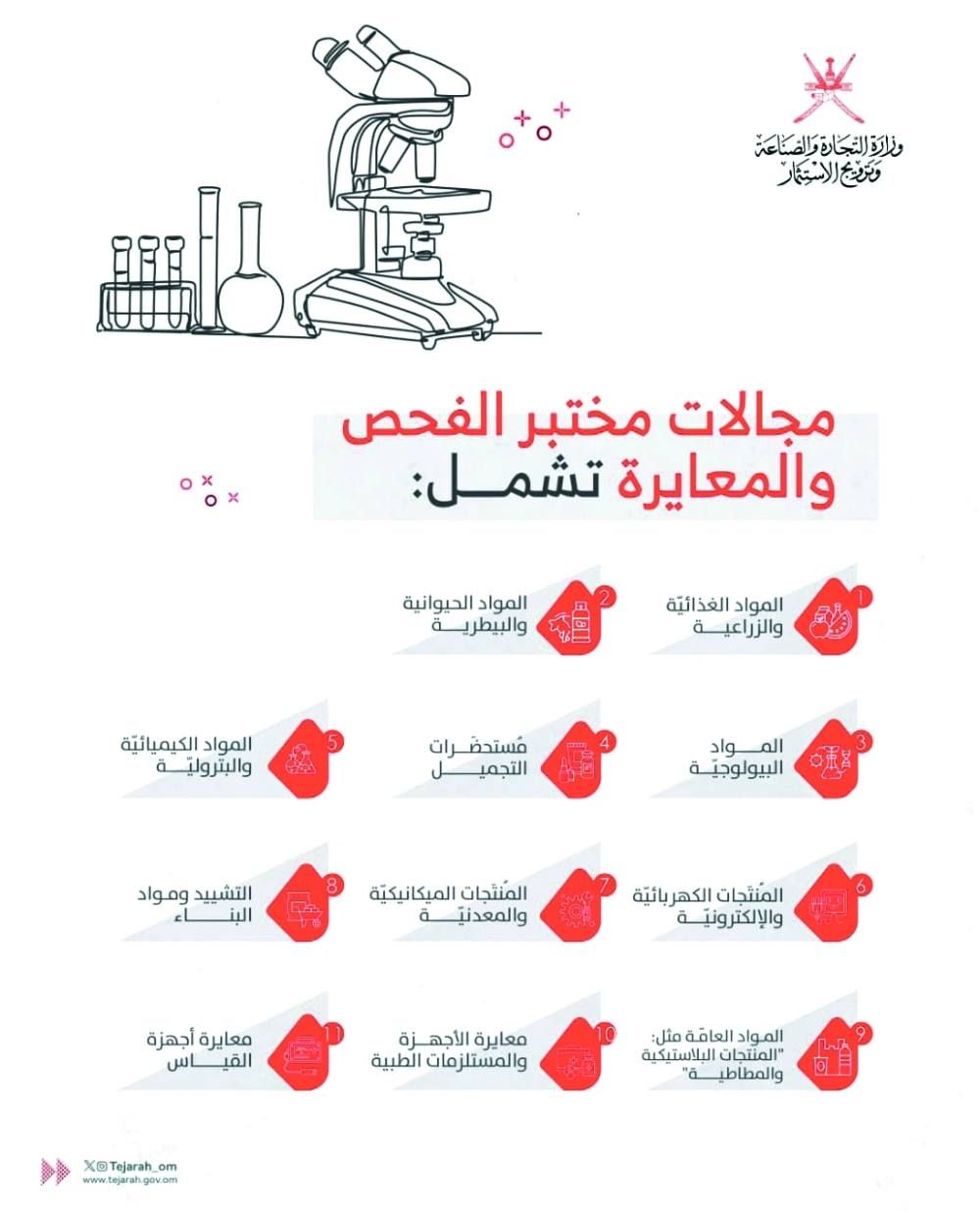
The Executive Regulations for Testing and Calibration Laboratories, issued by Ministerial Decision No. 3/2025, officially came into effect at the beginning of January 2026. The Ministry of Commerce, Industry, and Investment Promotion (MoCIIP) confirmed that the provisions of these regulations apply to all third-party laboratories. They also extend to first- and second-party laboratories should they seek registration with the competent authority. Under the new law, no laboratory may be established without a license, and operations may only commence after obtaining formal approval from the Ministry. The regulations aim to provide a comprehensive framework for laboratories to implement the necessary standards and procedures to ensure the accuracy and reliability of testing and calibration results. This initiative aligns with international standards, ensuring compliance with procedures that mitigate health and safety risks for lab personnel and end-users of tested products. Furthermore, the regulations assist laboratories in adhering to local and international legislation, thereby reducing legal and commercial risks. Imad bin Khamis Al-Shukaili, Director General of Standards and Metrology at MoCIIP, emphasized that these regulations are vital for guaranteeing the quality and reliability of services provided by these facilities. He noted that the regulatory framework serves as an essential tool for achieving international benchmarks and maintaining the trust of customers and stakeholders. Al-Shukaili detailed that the scope of testing and calibration laboratories covers various sectors, including food and agricultural products, animal and veterinary materials, biological substances, cosmetics, chemical and petroleum products, electrical and electronic goods, and mechanical and metallic products. It also encompasses construction and building materials, general materials such as plastics, rubber, wood, and paper, as well as textiles, leather, and the calibration of medical devices and measuring equipment. Highlighting key updates, Al-Shukaili stated that the regulations have revised accreditation periods from the previous five-year term to an annual renewal. Additionally, laboratories are now required to appoint an Omani national as a Quality Manager or Quality Supervisor during a specified transitional period. Laboratories must also provide clear price lists for testing and calibration services to clients. Any adjustments to service fees must be reported to the competent authority with justifications. Furthermore, the law mandates a clear mechanism for the disposal of chemical waste, allowing for contracts with specialized firms to ensure safe and documented disposal procedures. Licensing and Approval Process Licensing applications must be submitted via the Ministry’s electronic platform. Once a license is granted, the licensee has a maximum of one year to equip the laboratory; otherwise, the license will be considered void. Upon completing the laboratory setup, the licensee must apply for operational approval through the electronic platform. The competent authority will review the application within 30 working days. If all requirements are met, an inspection date will be set within 180 working days to verify compliance with the specified conditions. Approvals are granted for a period ranging from one to three years, contingent on a pledge to obtain an accreditation certificate from the competent authority within one year of starting operations. Administrative Penalties The regulations also outline administrative sanctions for non-compliance. MoCIIP may issue formal warnings, requiring corrective action within 15 working days. Administrative fines range from OMR 1,000 to OMR 5,000, with penalties doubling for repeat violations. In certain cases, approval for the specific scope of the violation may be suspended for up to 30 days or revoked entirely.