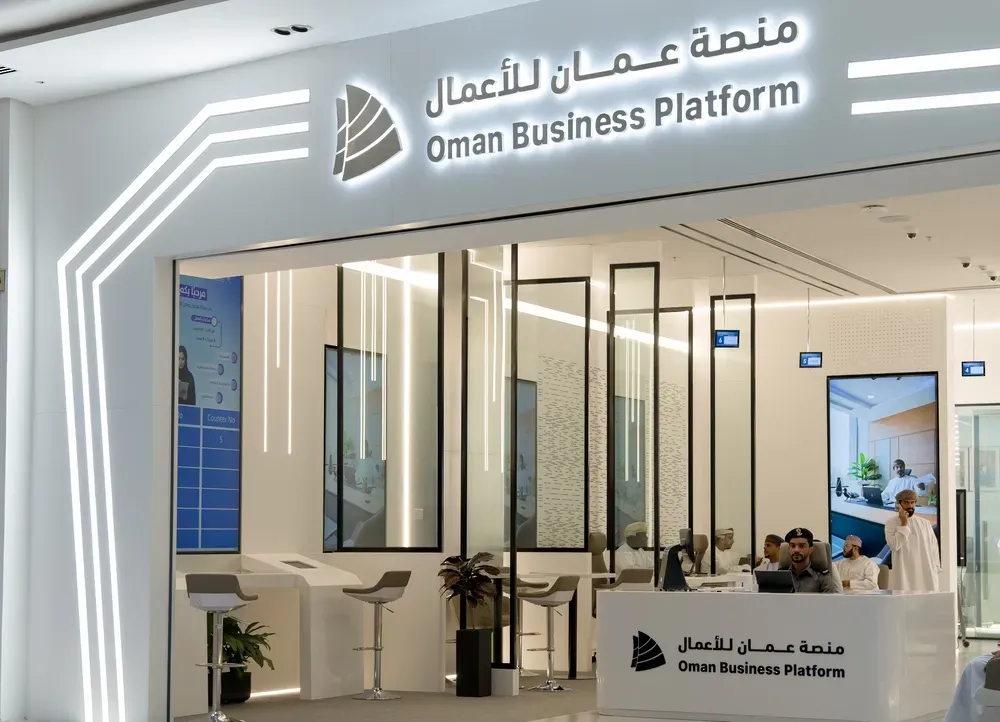
The Sultanate of Oman is working to enhance its investment environment in line with Oman Vision 2040 through legislative and regulatory reforms as well as digital transformation initiatives designed to strengthen the business climate. In recent years, notable changes have been introduced, including the removal of the minimum capital requirement for foreign investors under the Foreign Capital Investment Law (Royal Decree 50/2019), which came into effect in January 2020 (Article 5) (1). The government has also launched programs aimed at driving digital transformation and simplifying procedures for establishing and operating businesses. By the end of 2024, the share of government digital transformation is projected to reach 73%, up from 53% in 2023. Since 2021, approximately 1,700 government services have been digitized under this program through the end of 2024. According to the 2024 Annual Report on Digital Transformation issued by the Ministry of Transport, Communications and Information Technology, this reflects a clear acceleration of digitization efforts. In 2024 alone, around 827,129 transactions were completed through the “Invest Easy” portal, representing an increase of 15.1% compared with 2023. Moreover, Oman achieved a 72% score in the 2024 Government e-Services Maturity Index (GEMS), up from 66% the previous year, highlighting notable progress in advancing digital government services. Ease of Starting a Business: Oman in a Regional Context When compared with the United Arab Emirates and the Kingdom of Saudi Arabia on indicators related to starting a business, Oman has made notable progress, though further improvements remain underway. The table below highlights the main differences in the number of days required to establish a new company, licensing fees, the number of entities and procedures involved, and minimum capital requirements in Oman, the UAE, and Saudi Arabia, according to the World Bank’s Doing Business 2020 report: As shown above, the data indicates that Oman has made significant progress in reducing the time and procedures required to start a business. The average incorporation period has fallen to less than five days, and the number of required steps is now about four, in addition to the removal of the minimum capital requirement, according to Doing Business data. These indicators place Oman in a solid regional position, though some differences remain compared with neighboring countries. From a cost perspective, Oman is less expensive than the UAE. Registration and licensing fees are estimated at about 3% of GNI per capita, equivalent to a few hundred dollars, compared with roughly 17% in the UAE, driven by higher commercial licensing fees, and about 5% in Saudi Arabia. In terms of cost, Oman’s establishment fees are among the lowest in the region. Registration and licensing amount to around 3% of GNI per capita, versus 17% in the UAE and 5% in Saudi Arabia. The government continues to introduce reforms that improve the business environment, including reducing commercial registration fees for foreign investors and launching the Invest Easy portal to streamline services and coordinate between entities. On operating costs, the Omani government has taken several steps to ease the financial burden on companies, particularly smaller ones. For example, under Decision No. 224/2022, the Ministry of Labour reduced expatriate work permit fees by more than 89% for microenterprises registered in Riyada, with the reduction applying only to the first five expatriate workers. As a result, fees were set at just OMR 100 for companies employing no more than five foreign workers. This measure is part of broader efforts to support small and medium-sized enterprises and lower operating costs. In addition, Oman has introduced long-term residency programs for investors and launched digital platforms to enhance engagement. By the third quarter of 2024, foreign direct investment stock reached around OMR 30 billion, reflecting gradual market response to these reforms (10). Digital Platforms and Government Efficiency To improve service delivery, Oman’s Ministry of Commerce, Industry and Investment Promotion launched the Invest Oman platform in January 2023 (11). It brings together 15 government entities in one place to simplify investor transactions. In parallel, the Invest Easy portal (12) provides around 50 integrated e-services for establishing and managing companies online. The platform supports multiple languages, offers user-friendly design, and includes a mobile app with facial recognition for identity verification. They allow investors to check trade name availability, submit applications, and track progress transparently and without paperwork. Among the key innovations is the AI-powered Know Your Customer (KYC) service, introduced through Invest Easy (13). It enables foreign investors to complete digital verification from outside Oman, register new companies remotely, and avoid early-stage travel. Steps include facial recognition and ID document matching, reducing time and reliance on local agents (14). This reflects Oman’s commitment to using digital transformation to strengthen the business climate and attract investment. Company Registration in the Sultanate of Oman (local or foreign) The process of establishing companies in the Sultanate of Oman is organized and transparent, with a clear sequence of steps that facilitates for investors, both local and foreign, the start of their projects. The process begins through the Oman Business platform of the Ministry of Commerce, Industry and Investment Promotion, where the investor is required to create an account on the platform. The system provides a registration option using the electronic civil ID card for residents, while foreign investors may register using email. In some cases, electronic identity verification may be requested to ensure the accuracy and reliability of investor data (15). After that, the investor must choose the legal form of the company according to the nature of the activity and ownership of the project. Common options include: a Limited Liability Company (LLC) suitable for partnerships and allowing foreign ownership of up to 70% or 100% in certain sectors; a Sole Proprietorship allowing 100% ownership by an Omani national; a Branch of a Foreign Company if the expansion is a branch of an existing international firm; or a Free-zone Company to benefit from free-zone incentives. Choosing the appropriate legal entity is an important step, as it determines capital requirements, ownership ratios, and the type of license required. The next stage is trade-name selection in accordance with Omani naming rules. Three proposals may be submitted via the online portal, and once one is approved by the Commercial Registration Department, the name is reserved for the company. This process usually takes from one to two working days. The investor is advised to ensure the name is not already reserved by another company and that it aligns with cultural values before applying. After reserving the name, the investor uploads the required documents electronically via the platform. These include copies of the passports of all partners and managers, the memorandum and articles of association (standard templates are available), and in some cases, a business plan or project summary. The company’s address must also be specified, with a lease agreement for the premises or a letter to prove the address attached. Some authorities also require a capital deposit certificate from a local Omani bank, showing that the authorized capital has been deposited into a temporary account in the name of the company under incorporation. For foreign investors, preliminary security clearance (security and background check) may also be required before completing registration. This regulatory step usually takes from one to three days to confirm there are no legal impediments. It is noteworthy that there is no legal requirement to hire a lawyer or notary to establish a company in Oman, since the steps can be completed electronically; however, some investors prefer legal consultation to ensure the accuracy of contracts (17). Once the application and required documents have been submitted, an invoice is issued for the applicable government fees. These can be paid electronically using a credit card or via bank transfer. The amount varies depending on the company type and activity; for example, for a standard LLC it may range from OMR 50 to OMR 150, including registration, Oman Chamber of Commerce & Industry’s membership, and municipal fees. Once the fees are paid and the application is reviewed by the competent officials, the system issues the Commercial Registration (CR) certificate electronically. The CR certificate is the official document proving the legal existence of the juristic person (the company), enabling it to start operations lawfully. At this stage, the company becomes a legal entity recognized by the relevant authorities (18). After incorporation, the company must register with the Oman Tax Authority to obtain a Tax Identification Number (TIN). This is done by completing an electronic form through the Tax Authority portal within a specified period after starting activity, usually within 30 days. Tax registration allows the company to comply with the corporate income tax rate of 15% on profits, and also to register for the Value Added Tax (VAT) at a rate of 5% if annual revenues exceed the required threshold. The registration process is entirely electronic and without significant fees, and has become easier since the Tax Authority was established as an independent body in 2020. Obtaining the TIN is necessary for dealing with invoices, government entities, and for filing periodic tax reports (19). Opening a corporate bank account is also an essential step to activate the financial activities of the new company. After obtaining the CR certificate and TIN, company representatives can approach any bank in the Sultanate of Oman to open an account in the company’s name. The bank requires certain documents, including the CR certificate, the memorandum of association, and identity documents of the authorized shareholders. The account-opening process usually takes a few days due to banking compliance requirements, such as anti-money laundering checks and verification of ultimate beneficial owners. It is important to note that although the law does not require opening the account before incorporation, it was previously necessary to open a temporary account to deposit the authorized capital. With the removal of the minimum capital requirement, this has become easier; however, it remains important to open the account promptly after incorporation to facilitate financial transactions such as paying in actual capital, receiving payments, and processing salaries (20). When the company wishes to employ workers, whether Omani nationals or expatriates, the employer does not need to re-register with the Ministry of Labour system if the establishment is already registered with the Ministry of Commerce, Industry and Investment Promotion. Data from the commercial registration is relied upon through electronic linkage between the two ministries. Applications for non-Omani manpower permits are submitted electronically via the Ministry of Labour system, and the applicable fees are limited to expatriate work permits. For Omani employees, employment contract registration procedures are processed electronically in the Ministry of Labour system, with the data automatically transmitted to the Social Protection Fund via electronic linkage, ensuring that they receive retirement and social security benefits (21). Depending on the nature of the company’s activity, specific permits or licenses may also be required before actual operations can commence. For example, tourism companies require a license from the Ministry of Heritage and Tourism; industrial activities require an industrial permit from the Ministry of Commerce, Industry and Investment Promotion; health-related activities require a license from the Ministry of Health. In addition, all companies generally require a municipal license for their premises, issued by the competent municipality in the governorate where the premises are located. The municipality inspects the premises to ensure compliance with health and technical standards before issuing the license. Most of these licenses can be applied for via the Invest Oman portal or through dedicated electronic licensing systems, with varying validity periods and costs. For example, the municipal license must be renewed annually with fees that may reach hundreds of rials depending on the size of the activity. It is important for the investor to determine the specific requirements for their activity early and to start these procedures in parallel with the general incorporation steps to avoid delays in commencing operations. After completing the above steps, the company becomes legally eligible to operate in the Sultanate of Oman. Both local and foreign companies can complete registration procedures within a period ranging from one week to 10 working days, provided all requirements are fulfilled from the beginning. The total time required from submitting the application to obtaining all permits can be approximately 7 to 14 days, depending on the nature of the activity and whether additional licenses are required. As for total costs (for mandatory stages only), these generally range from OMR 200 to OMR 300 for a small company, covering commercial registration, chamber of commerce, municipal fees, and others. It is worth noting that Omani small and medium enterprises (SMEs) holding a Riyada card enjoy special privileges related to fees; these companies have been exempted from a large portion of expatriate manpower permit fees (22). According to Ministry of Labour Decision No. 224/2022, fees for these permits were reduced by more than 89% (23) compared to before, making them OMR 100 for companies employing up to five expatriate workers, and OMR 150 for those employing six to ten expatriate workers, with the requirement to employ at least one Omani worker. These significant reductions in fees provide an important incentive for entrepreneurs and help ease the financial burdens on start-ups (24). Promotional Incentives for Investment in the Sultanate of Oman The Sultanate of Oman is characterized by simplified procedures and a range of incentives for foreign investors, making it an attractive option for establishing businesses. Oman is also known for its political and social stability, with its economy holding a positive credit rating, such as BB+ with a stable outlook from Fitch (25). The national currency, the Omani rial, has remained stable and pegged to the US dollar for several decades, ensuring value stability for investors. In addition, Oman’s strategic location at the crossroads of maritime trade routes between Asia and Africa makes it an ideal logistics hub serving many regional markets. As mentioned earlier, Oman has made notable progress in digitizing its services and reducing bureaucratic procedures. The unified Oman Business platform and its accompanying mobile application allow companies to be established in an integrated manner from anywhere in the world (26). Investors can also monitor the status of their applications online in real time and receive direct notifications of every update. This transparency and the government’s quick response enhance investors’ confidence in the overall system. Furthermore, Oman today hosts a large Special Economic Zone at Duqm, in addition to several free zones in Sohar, Salalah, and Al Mazunah. New free zones were also established in Muscat, Sohar, and Salalah airports in 2022. These areas provide attractive incentives, including 100% foreign ownership, long-term tax exemptions, customs duty exemptions on imports, and no minimum capital requirement (27). For example, the Special Economic Zone at Duqm grants investors land usufruct rights of up to 50 years, renewable for another 50 years, in addition to corporate tax exemptions of up to 30 years, extendable for a similar period (28). These privileges make Duqm an ideal destination for large projects in industry and logistics, as demonstrated by its ability to attract major investments such as the Duqm Refinery and Petrochemical Complex. Likewise, the Al Mazunah Free Zone, located near the Yemeni border, seeks to attract commercial and industrial companies through its strategic position as a gateway to African and Yemeni markets, with companies there also benefiting from 30-year tax exemptions (29). In addition, Oman has invested heavily in upgrading its infrastructure over the past decade. It now possesses a modern network of highways linking ports with industrial zones. International airports have also been renovated, including the new Muscat International Airport, along with the expansion of Port of Salalah and the Sohar Port and Freezone project, which have enhanced Oman’s logistical capacity to support import and export activities (30). Moreover, easier land transport links with Saudi Arabia and the UAE, such as the opening of the Empty Quarter Road, further improve the efficiency of goods movement at lower costs and in shorter timeframes. These factors position Oman as a regional distribution hub with competitive operating costs. Studies indicate that expenses such as warehouse rentals and labor costs in Oman are significantly lower compared with Dubai and Riyadh (31). Challenges Foreign Investors May Face When Starting a Business Despite the continuous improvement in Oman’s business environment, some new investors still hold misconceptions about the complexity of procedures. In reality, there has been a major digital shift through the Invest Easy portal, which integrates most company formation steps, such as municipal licenses and lease contracts, into a single, unified interface. Official data reflects this progress: from April 2021 until the end of 2024, more than 328,000 licenses were issued automatically, with 89% of commercial activities licensed without the need for manual approvals. This demonstrates a high level of electronic integration and efficiency in government procedures. While some new investors may face initial challenges in navigating the system, the government continues its efforts to enhance the digital experience and consolidate all concerned institutions under one platform to facilitate investment and ensure smooth user interaction (32). In addition, startups face difficulties in opening bank accounts, particularly when shareholders or managers are non-residents. Even after completing legal incorporation, some banks require personal attendance, additional documents, or lengthy due diligence before approving an account. This delays a company’s ability to manage capital and meet financial obligations. Local banks are working to adopt digital Know Your Customer (KYC) measures, while relevant government entities have taken steps to simplify corporate account opening, setting timeframes for completion (for example, within five working days). From a legal perspective, although 100% foreign ownership is generally permitted, certain sectors are restricted or require a local partner or special approvals. Examples include land transport, contracting, and engineering consultancy. Investors, especially those unfamiliar with such requirements, may encounter the need for a local partner or additional approvals specific to their sector. To address this, it is suggested that clear lists of activities with such conditions be published on the investment portal, along with detailed guidance on compliance, such as obtaining additional licenses from specific ministries or submitting feasibility studies for certain projects. The Ministry of Commerce, Industry and Investment Promotion has published the Investment Incentives Guide, which provides information on investment sectors and their requirements, but this guide should be regularly updated and made more user-friendly for investors before starting the registration process (33). Moreover, Oman applies a system for calculating Omanisation ratios based on categories rather than solely by sector or size, as some may assume. Still, sector-specific Omanisation targets are set by specialized governance committees, monitored under national plans to localize jobs. Foreign investors may face challenges in finding qualified Omani talent for certain positions, or be required to comply with mandatory Omanisation ratios to ensure smooth operations. Regarding expatriate work permits, the government recently introduced a reduction of 89% in fees (34), but this applies only to small companies registered under the “Riyada” program and is limited to the first five expatriate hires. On the other hand, the government is actively promoting employment and training through incentive programs and collaboration with the private sector to develop tailored training initiatives for the national workforce, aiming to meet Omanisation requirements. In terms of e-services, foreign companies may face technical issues when interacting with government platforms, such as difficulties in making payments with international credit cards or uploading large documents. Nevertheless, government IT teams continue to upgrade and enhance these systems to ensure smoother user experiences. Looking at the overall picture, many of these challenges are not outright barriers but rather areas requiring refinement within a fundamentally strong framework. The Omani government demonstrates its seriousness in addressing these issues through reform initiatives such as the Tas’heel Project (Tas’heel means facilitation) which reduced government fees for 137 different investment services (35). It also shows responsiveness by incorporating feedback from the business community and adjusting policies accordingly. A notable example is Ministry of Labour Decision 224/2022, issued in response to private sector demands to lower expatriate permit costs and streamline related procedures, highlighting the government’s interactive approach and commitment to ongoing reform. Vision 2040 and Future Prospects Oman Vision 2040 represents an ambitious plan for the future of the national economy, with improving the business environment and attracting investment as key elements. Through this vision, the government aims to raise the Sultanate’s ranking in global competitiveness reports and Ease of Doing Business indicators to the level of advanced economies (36). Investors are expected to witness further positive developments in the coming years, with the expansion of artificial intelligence and machine learning technologies in government platforms to provide proactive services to investors. For example, an intelligent system will be developed to assist entrepreneurs in the steps of establishing their businesses and provide them with suggestions on available opportunities and incentives based on their information. A smart interactive guide has already been launched on the Invest Easy platform (37). At the same time, Oman is currently working to modernize its legislative framework to align with international best practices. Among these efforts is the issuance of a new Bankruptcy Law, which provides a modern framework for restructuring distressed companies instead of liquidating them. A dedicated Public-Private Partnership (PPP) law is also being prepared to facilitate investor participation in government projects. Once enacted, these laws will strengthen investor confidence by ensuring a legal safety net that protects their projects under various circumstances. In addition, alongside the Special Economic Zone at Duqm and its major projects under development, such as the Duqm Refinery, the Petrochemical Industries Complex, and the Tourism City, there are plans to establish new special economic zones in other locations, including Khasab in Musandam Governorate, aimed at enhancing tourism and logistics sectors. The Oman Logistics Project also includes the establishment of advanced distribution centers and the potential development of railway connections with Gulf states in the future, further reinforcing Oman’s position as a key transport hub. These projects will create new opportunities for investors to enter supply chains or provide auxiliary services, within a business environment that has become more streamlined and efficient. Oman Vision 2040 also focuses on developing a generation of Omani entrepreneurs by integrating entrepreneurship concepts into educational curricula and providing incubators and accelerators. This indicates that, in the coming years, a comprehensive ecosystem will emerge to support startups, starting with accessible financing through venture capital funds, incubators that provide office space and advisory support, and culminating in advanced financial markets that allow innovative companies to list and attract investments. Foreign investors can also benefit from this ecosystem by partnering with Omani entrepreneurs or investing in their companies, particularly in the presence of a supportive legal environment. Oman has made significant progress in improving its investment environment through a set of reforms that include streamlining company formation procedures, digitizing government services, and reducing operating costs for investors. These steps, such as abolishing the minimum capital requirement and simplifying company registration, have strengthened the Sultanate’s competitiveness at the regional level. The expansion of digital services has also reduced the time and costs required to establish projects, resulting in positive indicators, most notably an increase in foreign direct investment inflows and higher investor confidence, according to reports such as Arab News (38). Despite this progress, opportunities remain to further enhance Oman’s business environment. Key future priorities include improving system integration across government entities to ensure smoother, more coordinated transactions, as well as accelerating post-registration procedures such as opening bank accounts. Expanding access to financing, whether from the local banking sector or through international investment initiatives, is also crucial to support the growth of startups and new investors. Furthermore, continuing to develop the legal and regulatory framework in line with international best practices is necessary to sustain this momentum. In addition to ongoing reforms, attracting long-term investment requires a flexible and adaptable environment that can keep pace with economic and technological changes. In conclusion, Oman’s efforts to strengthen its investment climate reflect notable progress, but the next stage will require deeper attention to execution and stronger support for investors throughout all phases of their projects, from establishment to operation and expansion. This will be essential to achieving the goals of Oman Vision 2040 in building a diversified and sustainable economy.