Muscat, February 16, 2026
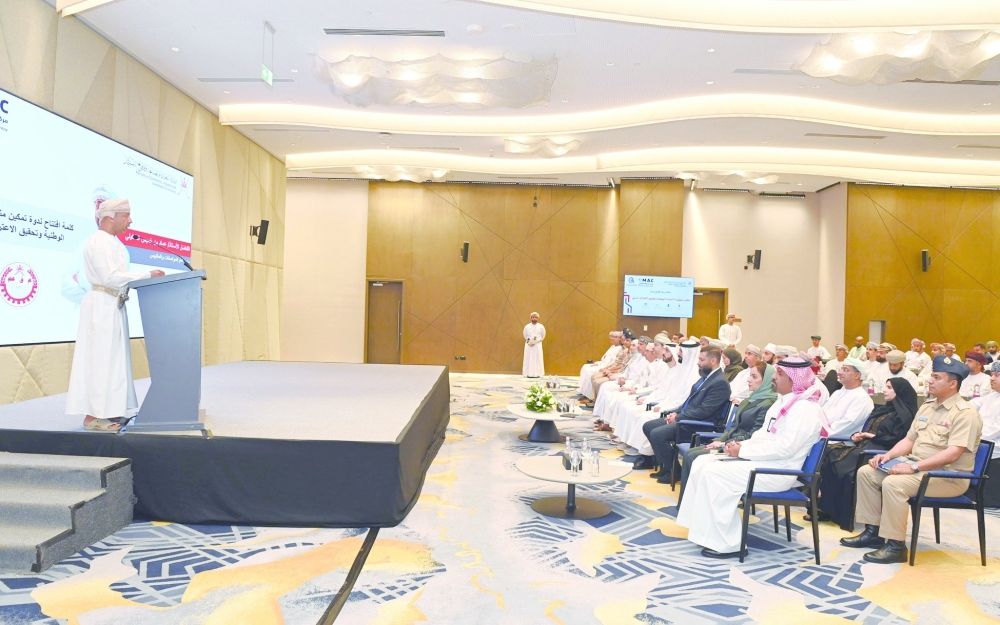
The Ministry of Commerce, Industry and Investment Promotion, represented by the Directorate General of Standards and Metrology, organized a seminar entitled "Empowering the National Accreditation System and Achieving International Recognition." The seminar was held under the patronage of His Excellency Eng. Ghalib bin Said Al Maamari, Undersecretary of the Ministry for Commerce and Industry, and saw wide participation from government and private entities, as well as international experts.
Imad bin Khamis Al Shukaili, Director General of Standards and Metrology, emphasized that organizing this seminar reflects the Ministry's commitment to raising awareness of accreditation within government and private sectors. He noted that accreditation is a fundamental pillar of quality infrastructure in countries worldwide. His Excellency also pointed out that the Sultanate of Oman has made significant progress in the UNIDO Quality Infrastructure for Sustainable Development Index, advancing 57 places to reach 60th globally, up from 117th out of 155 countries. He affirmed that this achievement reflects the national efforts exerted in developing the quality system.
Al-Shukaili explained that the Ministry has adopted several initiatives to develop the standards and metrology sector, launching nine initiatives focused on standardization, conformity assessment, metrology, laboratories, and accreditation, in line with the directives of His Majesty to develop the standards and metrology system. The symposium emphasized the importance of accreditation as a cornerstone of the quality infrastructure and its pivotal role in ensuring the efficiency and integrity of conformity assessment activities, including laboratories, inspection bodies, and certification authorities, thereby contributing to enhancing the competitiveness of national products and supporting exports.
The symposium addressed several key themes, including an introduction to the Oman Accreditation Center and its committees, the importance of international recognition, and the international quality infrastructure indicator (QI4SD) and its anticipated revisions for 2026, and their impact on the quality system in the Sultanate of Oman and the Arab countries. The sessions also discussed the importance of early preparation for the indicator updates and strengthening national coordination in data collection, verification, and submission according to internationally approved methodologies.
The symposium featured a specialized presentation on the role of peer review and the requirements for achieving global trust, along with a presentation on enhancing technical competence through risk-based thinking. This contributes to strengthening the credibility and reliability of the national accreditation system, improving the efficiency of evaluation and accreditation procedures, and working towards the adoption of a national halal system and the development of a national quality and standardization strategy to enhance the competitiveness of Omani products and support exports.
The symposium concluded with an extensive panel discussion on the role of stakeholders in the Omani accreditation system. This discussion emphasized the importance of partnership and integration among various parties to build a comprehensive national accreditation system that enjoys international recognition and contributes to solidifying the Sultanate of Oman's position on the global quality map.